
Culligan Water Softener Review
Models, Cost, Rental & What to Know Before You Buy
If you already know that you need a water softener and are now considering Culligan, this guide is designed for you. You may be comparing Culligan with other water softener brands, or you may already have a Culligan system or local dealer in mind and simply want to understand your options before making a decision.
At this stage, the important questions are no longer about whether you need a water softener. Instead, you probably want to know which Culligan system is appropriate for your home, how much it may cost, whether buying or renting makes more sense, what customers say about their experience, and what you should expect from a local Culligan dealer.
This review focuses on those questions. We will look at Culligan’s water softener models, system sizing, pricing, rental and purchase options, customer reviews, dealer and service experience, and the questions worth asking before you accept a quote. The goal is not simply to tell you whether Culligan is good or bad, but to give you the information you need to decide whether a Culligan system fits your needs and budget.
Not sure whether you actually need a water softener? Read our guide to [Water Softeners]. Still trying to understand your hard water problem? See our [Hard Water Guide].
Culligan Water Softener: What Are You Actually Comparing?
When you consider a Culligan water softener, you are not simply comparing one piece of equipment with another brand’s softener. The system itself is only one part of the decision. You are also evaluating how the system is sized for your home, what is included in the installation, how much you will pay upfront or over time, how you will own or rent the equipment, and what kind of service you can expect after installation.
This matters because two water softeners with similar basic functions can have very different overall costs and ownership experiences. A lower equipment price, for example, does not necessarily mean a lower total cost if installation, maintenance, repairs, or ongoing service are handled differently.
For that reason, this review looks at Culligan as a complete solution rather than judging the equipment in isolation. The key areas to compare are the system and its capacity, whether it is properly sized for your household and water conditions, what the installation includes, the total price, the available ownership options, ongoing maintenance and service, warranty coverage, and the local dealer responsible for installing and supporting the system.
Understanding these factors will make it easier to evaluate the specific Culligan model and quote you receive, rather than choosing based solely on a model name, advertised feature, monthly payment, or online review.
Culligan Water Softener Models
Culligan’s current residential water softener lineup includes several different systems rather than one single “Culligan water softener.” The current product catalog includes the Aquasential Smart High Efficiency Water Softener, Aquasential Advantage Whole Home Water Softener, Aquasential Select Series and Select Plus Series, Smart HE Municipal Water Softener, Smart HE Softener-Cleer, and Smart HE Twin Softener.
These systems are not simply different versions of the same machine. They are positioned for different combinations of household size, water usage, water source, water conditions, efficiency requirements, and desired features. Culligan also offers different tank sizes within several product families, so the model name alone does not tell you exactly which configuration a dealer may recommend.
For example, the Aquasential Smart HE Water Softener is available in several tank sizes, while the Aquasential Select and Select Plus lines include multiple configurations with different tank and connection sizes. Culligan states that the recommended system and size are based on factors such as water flow, household usage, water hardness, and pipe size.
That distinction matters when comparing a Culligan quote. Two homeowners may both be quoted a “Culligan water softener” but receive different systems or sizes because their water conditions and household requirements are different.
Culligan Smart HE Water Softener

The Aquasential Smart High Efficiency Water Softener is one of Culligan’s current flagship residential softening systems. It is designed for whole-home soft water and combines high-efficiency operation with connected features intended to make monitoring and maintenance easier.
The Smart HE system is particularly relevant for homeowners who want more than a basic softener and value features such as smartphone notifications, water-use monitoring, remote controls, and service alerts. Through the Culligan Connect app, users can receive salt-related alerts, use an Away Mode, monitor water usage, and place the system into bypass when appropriate. Culligan also says that its service team can receive system information and remotely troubleshoot certain issues.
The system is available in multiple sizes, including 9-, 10-, 12-, and 14-inch configurations, with additional configuration differences such as indoor or outdoor installation and upflow options on certain models. Culligan recommends sizing the system according to water flow, household usage, hardness, and pipe size rather than simply selecting the largest available unit.
Efficiency is another major part of the Smart HE positioning. Culligan describes the system as a high-efficiency softener designed to reduce salt, water, and electricity use, and states that its patented technology can reduce operating costs by up to 46%. That figure is a manufacturer claim, so it should be treated as a product-performance claim rather than a guaranteed saving for every household.
The Smart HE also comes with Culligan’s service-oriented ownership model. Depending on the local dealer and arrangement, homeowners can purchase, finance, or rent the system, while installation and ongoing maintenance can be handled through the local Culligan operation.
If a dealer recommends a Smart HE, it is worth asking which tank size and configuration they are proposing, what water-test results were used for sizing, what the quoted installation includes, which smart features are included, and what ongoing service is covered. Those details can have as much impact on the ownership experience as the Smart HE model name itself.
Culligan Select and Select Plus Water Softeners

The Aquasential Select Series and Select Plus Series occupy a different position within Culligan’s current lineup. Culligan describes the Select Series as an affordable design intended to provide the core benefits of soft water, while the Select Plus range provides additional configurations, including 1-inch models and larger system options.
The current Select lineup includes configurations such as the Aquasential Select 8-inch and Select 9-inch S, while the Select Plus family includes 9-, 10-inch S, 10-inch, and 12-inch configurations. The exact configuration can affect dimensions, connection size, capacity, and the amount of water the system can handle.
This makes the Select and Select Plus lines worth considering for homeowners who want a Culligan system without necessarily prioritizing all of the connected features associated with the Smart HE platform. Culligan also offers regular salt delivery and service options with these systems, which can make them part of the same service-based ownership model even when the equipment itself is less feature-focused.
The practical question is therefore not simply whether Select or Smart HE is “better.” The more useful question is whether the additional features and high-efficiency positioning of the Smart HE provide enough value for your household compared with the simpler Select configuration being offered in your quote.
If you are comparing the two, ask the dealer to show you the recommended size for each system, the expected salt and water consumption, the included features, the warranty, the installation cost, and the total purchase or rental cost. This gives you a more meaningful comparison than looking at the model names alone.
Culligan Twin-Tank Systems
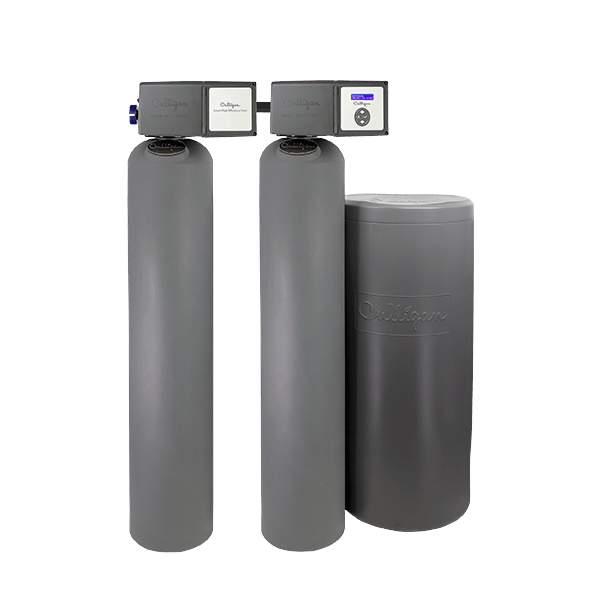
The Aquasential Smart High Efficiency Twin Water Softener is designed for homeowners who want a continuous supply of soft water, including during regeneration. Instead of relying on a single softening tank, the system uses two tanks so that one can continue providing softened water while the other is regenerating.
The main reason to consider a twin-tank system is therefore not simply that a household is large. The more important question is whether uninterrupted soft-water availability is valuable enough to justify the additional system complexity and cost.
A twin-tank system can be particularly relevant for households with high or variable water demand, situations where water use continues around the clock, or homeowners who specifically want to avoid periods when the softener cannot provide softened water during regeneration. Culligan currently offers the Smart HE Twin in multiple sizes and says its local experts determine the appropriate configuration based on factors such as water flow, usage, hardness, and pipe size.
The current Smart HE Twin also includes connected features such as salt refill alerts, maintenance notifications, remote troubleshooting capabilities, usage tracking, remote bypass, and Away Mode through the Culligan Connect app.
For most homeowners, the important comparison is therefore between a properly sized single-tank system and a twin-tank system that provides continuous softening. A twin system should not automatically be considered necessary simply because it has two tanks. Ask the dealer to explain what specific water-use pattern or household requirement makes the twin configuration appropriate for your home.
Culligan Softener-Cleer and Specialty Systems
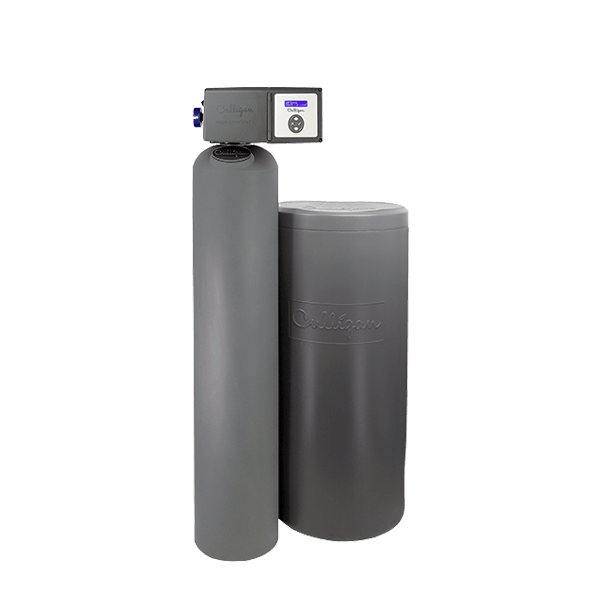
Culligan’s Softener-Cleer systems are different from a conventional water softener because they combine water softening with additional filtration capabilities.
The current Aquasential Smart High Efficiency Softener-Cleer is positioned as a whole-home system for situations where hardness is accompanied by iron concerns, particularly in well-water applications. Culligan says the system combines softening with iron filtration and offers configurations designed for different household requirements.
This distinction is important because a homeowner with well water may not simply need a larger softener. If iron is contributing to staining or other water-quality problems, a system that combines softening and filtration may be more appropriate than treating hardness alone.
Culligan also offers a Softener-Cleer Plus option intended to address low levels of hydrogen sulfide, the compound commonly associated with a rotten-egg odor. The current Smart HE Softener-Cleer also includes features such as salt-level alerts, maintenance notifications, water-use tracking, and optional leak monitoring through Culligan’s connected platform.
Culligan also continues to list a High Efficiency Softener-Cleer Home Water Conditioner with Iron Filter. Its current product information describes four available system sizes and states that the recommended configuration depends on water flow, usage, hardness, and pipe size.
So, when you see “Softener-Cleer” on a Culligan quote, do not treat it as simply another name for the standard Smart HE softener. Ask what additional water problem the system is designed to address and whether your water test actually shows a need for that additional treatment.
Older Culligan Models
Culligan’s older product names can still appear in search results, used equipment listings, installation manuals, and older reviews. These include models such as the Medalist Series, Gold Series, older HE Water Softeners, HE Twin systems, and earlier HE Softener-Cleer configurations. Culligan’s current support library still hosts manuals for several of these older product families.
That does not necessarily mean these models represent the current residential lineup available from a local Culligan dealer. For example, the current Culligan product catalog prominently presents Aquasential Smart HE, Advantage, Select and Select Plus, Smart HE Municipal, Smart HE Softener-Cleer, and Smart HE Twin systems, while older model names remain accessible through the company’s historical product documentation.
If you are researching a used Culligan system, an older installation, or a model mentioned in an older review, it is therefore important to distinguish the model’s historical specifications from Culligan’s current product offerings.
A useful rule is:
“This model appears in older Culligan materials and may not represent the current lineup.”
That distinction is especially important when comparing specifications, warranties, smart features, availability, or pricing. A review written several years ago may accurately describe the Culligan system that was available at that time while still being misleading if you use it to determine what Culligan currently offers.
The same caution applies to model-specific searches. If you find a Culligan HE, Medalist, Gold, or older Twin model through Google, first determine whether you are looking at a current product, an older model that remains supported, or a discontinued configuration. Then compare it with the current Aquasential lineup rather than assuming the two are equivalent.
How to Choose the Right Culligan Water Softener
Once you have narrowed your search to Culligan, the important question is no longer simply which water softener you need. It is which Culligan system and configuration makes sense for your home.
Culligan currently offers several residential systems, including the Smart HE Water Softener, Select and Select Plus, Smart HE Municipal Water Softener, Smart HE Softener-Cleer, and Smart HE Twin Softener. These systems are designed for different water-treatment needs and feature sets, so the right choice depends on what you want your Culligan system to do.
Start With Your Water and Household Requirements
You do not need to become a water-treatment expert to compare Culligan models. What matters is whether the information used by the dealer actually supports the system and configuration being recommended.
Culligan says its experts use factors such as water hardness, water usage, flow rate, and pipe size when determining the appropriate system and size. For well-water applications, additional conditions such as iron can change the type of Culligan system that makes sense.
That gives you a useful way to evaluate a Culligan recommendation.
If you are quoted a standard Smart HE or Select system, ask what water-test results and household usage information were used to determine the size. If you are quoted a Softener-Cleer system, ask what specific water condition requires the additional treatment. If you are quoted a Municipal Water Softener, ask what chlorine-related treatment benefit is being addressed.
The point is not to calculate the system yourself. It is to make sure the Culligan model you are being offered has a clear reason behind it.
Why Bigger Isn’t Always Better
With Culligan, a larger tank or higher-capacity configuration is not automatically the better choice.
The appropriate size should correspond to the water demand and conditions that Culligan used to make its recommendation. Culligan specifically states that its sizing considers factors such as water flow, household usage, hardness, and pipe size.
If a dealer recommends a substantially larger system than you expected, ask them to explain the reason.
A simple question can reveal whether the upgrade is solving an actual requirement or simply adding capacity:
“What specific requirement makes this larger Culligan system necessary for my home?”
This is particularly useful when comparing a standard Smart HE or Select configuration with a larger or more advanced Culligan system.
When a Twin-Tank System May Make Sense
Culligan’s Smart HE Twin is designed for situations where continuous soft-water availability is an important consideration.
The two-tank configuration allows the system to continue supplying softened water while one tank regenerates. Culligan specifically positions the Smart HE Twin for homes with high water usage and continuous soft-water requirements.
That does not mean every large household needs a twin system.
If a dealer recommends the Smart HE Twin, ask what aspect of your household’s water-use pattern makes a twin-tank system appropriate and what you would gain compared with the corresponding single-tank Culligan system.
The key comparison is therefore not simply “single tank vs. twin tank.” It is whether the additional capability of the Twin justifies the additional equipment and cost for your particular household.
When a Different Culligan System May Be More Appropriate
The biggest differences between Culligan systems are not always about capacity. Some models address different water-treatment situations.
If your primary requirement is conventional whole-home softening with Culligan’s connected features, the Smart HE may be the system to compare first.
If you want a more straightforward Culligan system without the same emphasis on Smart HE features, the Select or Select Plus lines may be relevant. Culligan positions these as part of its current residential softener lineup alongside the Smart HE systems.
If you have municipal water and also want Culligan’s softening system to address chlorine, the Smart HE Municipal Water Softener is a different proposition because it combines softening with chlorine filtration.
If you have well water and your water test shows iron that needs to be addressed, the Smart HE Softener-Cleer is designed specifically around softening plus iron filtration. Culligan also offers a Softener-Cleer Plus option for low levels of hydrogen sulfide.
And if uninterrupted soft-water availability is particularly important, the Smart HE Twin deserves comparison with the single-tank systems.
In other words, the Culligan model should follow the water-treatment requirement rather than simply the model’s position in the product lineup.
Not sure which Culligan system fits? Get your water tested and ask the dealer to explain the sizing and model recommendation.
How Much Does a Culligan Water Softener Cost?
There is no single Culligan water softener price that applies to every customer.
The amount you are quoted depends on the Culligan system, configuration, installation requirements, and the services or payment arrangement included in the proposal. Culligan itself directs customers toward a local water consultation and quote rather than publishing one universal price for its residential softeners.
For someone comparing Culligan with other brands, the important question is therefore not just “How much is the Culligan unit?” but “What exactly does the Culligan quote include?”
Culligan Water Softener Equipment Cost
The equipment portion of a Culligan quote depends on the system and configuration being recommended.
A Select or Select Plus system is not the same product configuration as a Smart HE, Smart HE Twin, Municipal Water Softener, or Softener-Cleer. Culligan also offers different sizes within several product families.
As a result, an online price for one Culligan model should not automatically be used as the expected price for another model or configuration.
When comparing a Culligan quote, identify the exact product first. The quote should make clear which Culligan system is being proposed and, where relevant, which size or configuration you are receiving.
This is especially important when comparing Culligan with another brand. A lower-priced competing softener may simply be a comparison between different levels of equipment.
Installation Cost
The price of a Culligan system and the price of having that system installed are not necessarily the same thing.
Culligan’s model-specific recommendations are made for the customer’s home, and installation can therefore depend on the existing plumbing and the configuration being installed. Additional work may be required depending on where the system is located and what other water-treatment equipment is included.
When reviewing a Culligan quote, look for a clear distinction between the equipment and the installation.
Ask whether the quoted installation includes all required plumbing connections and whether any additional work could be charged separately.
This is more useful than trying to find a generic “Culligan installation price,” because the actual installation scope can vary from one home to another.
Ongoing Culligan Water Softener Costs
The purchase price is only part of the Culligan ownership equation.
Culligan offers ongoing services including salt delivery, maintenance, and system support. The exact services available and their cost depend on the arrangement with the local Culligan operation. Culligan also offers rental plans in which regular maintenance and repairs are included in the monthly payment.
This means two Culligan proposals with similar equipment prices could have different long-term costs if one includes more service or maintenance.
When comparing offers, check whether the quoted arrangement includes or separately charges for salt delivery, routine maintenance, repairs, service calls, and other ongoing support.
These costs become particularly important when comparing a Culligan purchase with a rental agreement.
Why Culligan Prices Can Vary
One reason Culligan prices are difficult to reduce to a single national figure is the way Culligan’s customer model works.
Culligan connects customers with local Culligan experts for water testing, system recommendations, installation, and payment options. The company offers purchase, financing, and rental arrangements, and the details of those arrangements can vary by local operation.
That means the Culligan quote you receive is better understood as a package rather than simply a retail price for a piece of equipment.
When evaluating that package, separate three numbers:
The equipment price tells you what you are paying for the Culligan system.
The installed price tells you what it costs to get that system installed and operating in your home.
The ongoing cost tells you what you will pay for services such as salt delivery, maintenance, repairs, or other support.
This distinction is particularly important if you are comparing Culligan with another brand. A competitor may advertise a lower equipment price but provide a different level of installation or ongoing service.
What Should You Ask About a Culligan Quote?
Before accepting a Culligan quote, make sure you understand exactly what you are being offered.
Ask for the exact model and configuration, why that model was recommended, what installation work is included, what warranty applies, and which ongoing services are included or optional.
If the proposal is a rental, also ask about the monthly payment, contract length, what happens at the end of the agreement, and which maintenance and repair costs are covered. Culligan currently offers rental, financing, and purchase options, but the specific terms are determined through the local Culligan operation.
The goal is to compare the actual Culligan package you are being offered—not a generic Culligan price found online.
Culligan Water Softener Rental vs. Buying
Choosing a Culligan water softener is only one part of the decision. You also need to decide how you want to pay for and own the system.
Culligan currently offers three main payment options for its water treatment systems: purchasing the system, financing the purchase, or renting the system. Culligan describes rental plans as a way to get a system with a low monthly payment while including regular maintenance and repairs, although the specific terms depend on the agreement with the local Culligan operation.
For a homeowner comparing Culligan with other brands, this distinction matters because you are not necessarily comparing the same thing when you compare a Culligan rental price with the purchase price of another water softener.
The equipment, ownership, service, contract, and long-term cost all need to be considered together.
How Culligan Rental Works
With a Culligan rental, you do not purchase the water softener outright. Instead, you enter into a rental agreement and pay a recurring monthly amount for the system.
Culligan currently advertises rental plans with a low monthly payment and states that regular maintenance and repairs are included. Its current water-softener page also advertises rental plans starting as low as $9.95 per month, although this should not be treated as a universal price because availability, system, location, promotions, and dealer participation can affect the actual offer.
The major attraction of this arrangement is that the upfront cost can be lower than purchasing a system. It can also reduce the financial uncertainty associated with repairs because Culligan states that regular maintenance and repairs are included in its rental offering.
However, the monthly payment is only one part of the agreement.
Before renting, you need to know how long the agreement lasts, what happens when the agreement ends, whether the system remains Culligan’s property, what services are included, and whether there are additional charges that are not part of the advertised monthly payment.
Culligan also states that rent-to-purchase options may be available, but the details should be confirmed with the local dealer rather than assumed to be part of every rental agreement.
Buying a Culligan Water Softener
When you purchase a Culligan water softener, the system becomes yours rather than remaining under a rental arrangement.
Culligan currently describes purchasing as owning the system from day one. A purchase can involve a larger initial payment, although Culligan also offers financing for customers who prefer to spread the cost over time.
Ownership changes how you should think about ongoing costs.
You own the equipment, but maintenance and repairs are no longer automatically part of a rental payment. Culligan offers maintenance and repair agreements that can be added to purchased systems, and services such as salt delivery can also be arranged separately.
This means a purchase quote should not be evaluated solely on its upfront price.
You should also find out what warranty coverage applies, what maintenance is included during the warranty period, what happens after the warranty expires, and how much optional Culligan service would cost if you want ongoing support.
For homeowners who expect to stay in the property for many years, ownership also means that the monthly rental payment eventually ends once the system has been paid for. With a rental agreement, payments continue according to the terms of the contract.
Financing a Culligan Water Softener
Financing is different from renting because you are financing the purchase of the system rather than paying to use a system that remains under a rental arrangement.
Culligan currently lists financing as one of its three payment options and describes its financing plans as offering little to no money down and flexible monthly payments. Culligan states that you own the system when the financing plan is complete.
This makes financing particularly important when comparing a Culligan quote that appears to have a similar monthly payment to a rental quote.
The monthly payment alone does not tell you which arrangement costs less.
A financing agreement may have a defined purchase price, term, interest rate, and total amount paid. A rental agreement may have a different monthly payment, contract period, service coverage, and ownership arrangement.
When comparing the two, look beyond the monthly number and compare the total amount paid over the same period.
The exact financing terms available to you should be confirmed with the local Culligan dealer because financing availability and terms can vary.
Buy vs. Rent: Compare the Total Cost
The easiest way to compare a Culligan rental with a purchase is to calculate the total cost rather than comparing the monthly payment with the purchase price.
For a rental, start with:
Rental cost = monthly payment × number of months + applicable fees
Then determine what services are included in that payment. If maintenance and repairs are included, that has value because you would otherwise need to pay for those services separately.
For a purchase, use:
Purchase cost = equipment + installation + expected maintenance + expected repairs
If the purchase is financed, use the actual total amount you will pay under the financing agreement rather than simply multiplying the advertised monthly payment by the number of months.
For example, suppose a rental quote is $60 per month for 60 months. The base rental payments would be $3,600 before considering any additional fees or services that are outside the agreement.
Now suppose a purchased system costs $2,800 installed. If you expect $400 in maintenance and repairs during the same five-year period, the comparable ownership cost would be approximately $3,200.
That does not automatically make the purchase the better option. The rental may include services, repairs, upgrades, or other benefits that the purchase does not. Conversely, the purchased system becomes an owned asset after the purchase cost has been paid.
The useful comparison is therefore:
Total rental cost over the period
versus
Total ownership cost over the same period
Then compare what you own and what services remain available at the end of that period.
This is one of the most important calculations to make before accepting a Culligan rental offer because a low monthly payment can make a rental appear inexpensive while hiding the total amount paid over a long contract.
Questions to Ask Before Signing a Rental Agreement
A Culligan rental quote should be treated as a contract, not simply as a monthly price.
Before signing, ask the dealer to clearly explain the contract length and whether the agreement is month-to-month, fixed-term, or another arrangement.
Ask what happens if you want to cancel the agreement early. Find out whether there is an early termination fee and whether there are any other charges associated with ending the rental.
Ask whether there is a buyout or rent-to-own option and, if so, how much you would need to pay to become the owner of the system. Culligan states that rent-to-purchase arrangements may be available, but this should be confirmed with the specific dealer and agreement.
If you may move before the contract ends, ask what happens to the rental agreement. Find out whether you can transfer the agreement to another property, terminate it, or have the system removed.
You should also establish exactly what maintenance and repairs are included. Culligan’s national payment information says regular maintenance and repairs are included with rental plans, but the actual agreement should define the scope of that coverage.
Ask whether salt delivery is included or charged separately. Culligan states that salt delivery is available as a service, but its rental information indicates that salt delivery may be an additional service rather than automatically included in the rental payment.
Finally, ask whether the monthly payment can increase during the contract and under what circumstances.
A good Culligan rental comparison should therefore answer these questions before you sign:
What is the exact monthly payment?
How long will I make the payments?
What is the total amount I will pay if I keep the system for the full contract?
Who owns the system during and after the agreement?
Can I buy the system later?
What does it cost to cancel early?
What happens if I move?
Are maintenance and repairs fully included?
Is salt included?
Can the monthly payment increase?
What happens when the contract ends?
Once you have these answers, you can compare the Culligan rental against purchasing or financing the same or equivalent system on a total-cost basis rather than making the decision based on the monthly payment alone.
Culligan Water Softener Reviews: What Are Customers Saying?
Reading Culligan water softener reviews can tell you something that product specifications cannot: what the ownership and service experience may look like after installation.
However, customer reviews need to be read carefully. Reviews on ConsumerAffairs, BBB, Trustpilot, Reddit, and other community platforms are individual customer reports. They can help identify recurring themes, but they are not controlled product tests and should not be treated as representative of every Culligan customer.
Across these sources, customer experiences cover both positive and negative aspects of Culligan, with many of the recurring comments focusing not only on the equipment itself, but also on installation, service, pricing, billing, and the local dealer.
What Customers Like About Culligan
Positive Culligan reviews commonly mention the performance of the water treatment system, professional installation, knowledgeable technicians, and the convenience of having a local company handle testing, installation, maintenance, salt delivery, or repairs.
For example, recent ConsumerAffairs reviews include customers describing Culligan technicians and service personnel as professional, helpful, and informative. Other customers report positive experiences with salt delivery and long-term service.
Long-term experiences can also be positive. In a recent Reddit discussion about Culligan softeners, one customer reported having a Culligan system for many years without major problems, while another described nearly three decades of use without significant issues. These are individual experiences rather than evidence that every Culligan system will perform the same way, but they show that long-term satisfaction is possible.
Convenience is another recurring theme. For homeowners who prefer not to troubleshoot water-treatment equipment themselves, having a local company available for water testing, system setup, maintenance, repairs, and salt delivery can be an important part of the value proposition. Culligan itself describes these services as part of the support offered through local water experts.
What Customers Complain About
Negative reviews tend to cover a broader range of issues than the softening performance itself.
Pricing and service charges are frequent themes. Some customers report being surprised by charges for service visits, labor, maintenance, or other fees. Recent ConsumerAffairs reviews include complaints about service charges and ongoing maintenance costs, while Trustpilot reviews include similar complaints about charges following service visits.
Billing and contract-related issues also appear in customer complaints. BBB complaint records for Culligan-related businesses include billing, service or repair, delivery, product, and customer-service complaints. The specific mix varies by local business, which is important because Culligan operates through local dealers rather than one identical service operation everywhere.
Rental arrangements can generate another type of complaint. Customers may focus on the accumulated rental cost, what happens when they move, how equipment ownership works, or what they are required to pay to end or buy out an agreement. Community discussions include customers comparing long-term rental costs with purchasing their own equipment.
Service response and communication are also recurring themes. Some recent reviews describe delayed appointments, missed service visits, difficulty getting repairs scheduled, or frustration communicating with a local office. At the same time, other customers report very positive service experiences, which reinforces the importance of looking at the specific local dealer rather than assuming that every Culligan location operates identically.
Are Culligan Complaints About the Product or the Dealer?
This distinction is easy to miss when reading online reviews.
A complaint about Culligan does not necessarily mean that the water softener itself is defective. The problem could involve the equipment, installation, maintenance, customer service, billing, delivery, or the terms of a rental or service agreement.
For example, a customer reporting that a softener is not producing properly softened water could potentially be describing an equipment problem, incorrect settings, installation problems, inadequate maintenance, or another issue that requires diagnosis. A complaint about a missed appointment is primarily a service issue. A disputed monthly charge is a billing or contract issue rather than evidence about the softener’s ability to soften water.
Recent BBB complaint records illustrate this distinction: complaints associated with Culligan businesses are categorized separately into service or repair, billing, delivery, product, customer service, order, and sales or advertising issues.
The same distinction appears in customer reviews. Some customers report being satisfied with the softener itself while criticizing the cost or after-sales service. Others report positive experiences with installation and technicians.
That means a useful Culligan review should ask two separate questions:
Is the Culligan system itself performing as expected?
And is the local company providing the installation, service, billing, and support experience you expected?
Those are related questions, but they are not the same question.
The Culligan Dealer Experience
When you buy or rent a Culligan water softener, you are not only choosing a piece of equipment. You are also entering into a relationship with the Culligan dealer or local water-treatment operation serving your area.
This matters because the local dealer may be involved in the water test, system recommendation, sizing, installation, maintenance, repairs, payment arrangements, and ongoing service. Culligan’s own support materials direct customers to local water experts for system setup, inspection, repairs, maintenance programs, and water testing.
What Does a Culligan Dealer Do?
The process typically looks something like this:
Water test → recommendation → sizing → quote → installation → service
The first step is understanding the water conditions and the requirements of the home. Culligan says its local experts can perform water testing and use that information to recommend an appropriate treatment solution.
The dealer then recommends a system and configuration, provides a quote, and handles or arranges installation. Depending on the system and local offering, the relationship may continue through maintenance, salt delivery, repairs, service agreements, or other support.
This is one of the major differences between buying a Culligan system through a local dealer and simply purchasing a water softener from a retailer and arranging installation separately.
What Can Vary Between Culligan Dealers?
Not every Culligan customer receives exactly the same commercial or service experience.
Pricing can vary because the recommended system, installation requirements, services, and local dealer arrangements can differ. Rental and financing options can also depend on the local Culligan operation and the specific agreement offered.
Service can vary as well. One customer may report a highly responsive technician and straightforward maintenance experience, while another customer in a different market may complain about delayed appointments or communication problems. Recent reviews across ConsumerAffairs, Trustpilot, Reddit, and BBB show this range of experiences.
This is why reading a national Culligan rating alone may not tell you enough about the dealer you will actually be dealing with.
When researching Culligan, look for reviews of the specific local dealer serving your address. Pay particular attention to recent comments about installation quality, service response, billing, repairs, rental agreements, and communication.
Why the Dealer Matters
The dealer matters because many of the things that determine your total experience happen after you have chosen the brand.
A good way to evaluate a Culligan dealer is not simply to ask, “Does this dealer have good reviews?”
Instead, evaluate the process before signing anything.
Ask the dealer to explain exactly which Culligan model is being recommended, why that model and configuration were selected, what the water test showed, what is included in the installation, what warranty applies, what maintenance is included, and what you will pay if the system needs service after installation.
If you are considering rental, ask for the complete rental terms rather than focusing only on the monthly payment. Ask about contract length, total cost, ownership, cancellation, moving, repairs, maintenance, salt, and what happens when the agreement ends.
The quote itself is also a useful way to evaluate the dealer. A clear quote should make it possible to understand what equipment you are getting, what installation work is included, what services are included, and which costs may occur later.
The goal is not to determine whether one Culligan dealer is universally “good” or “bad.” The goal is to determine whether the specific dealer serving your area is transparent about the equipment, pricing, installation, service, and contract you are being offered.
That distinction can be just as important as choosing the Culligan model itself.
Is Culligan a Good Water Softener?
Whether a Culligan water softener is worth considering depends less on a simple “good or bad” rating and more on what you want from a water-treatment purchase.
Culligan’s model is different from simply buying a water softener online and arranging installation yourself. Depending on the local offering, Culligan can combine water testing, system selection, professional installation, financing or rental, and ongoing service through a local dealer.
That can be valuable if you want a more managed experience. On the other hand, those services can also increase the total cost compared with purchasing a system yourself.
The better question is therefore not simply “Are Culligan water softeners good?” but “Does the Culligan ownership and service model make sense for what I value?”
Culligan May Be Attractive If You Value Professional Installation and Support
Culligan may make sense if you prefer having a water-treatment company handle more of the process rather than selecting and installing equipment yourself.
A local Culligan operation can provide water testing, recommend a system, handle installation, and provide ongoing service depending on the agreement. Culligan also offers purchase, financing, and rental arrangements, giving homeowners several ways to pay for a system.
This can be particularly relevant if you do not want to become responsible for selecting components, determining the installation requirements, troubleshooting equipment, or finding a separate service provider later.
The trade-off is that you are paying for more than the equipment itself. When comparing Culligan with another water softener, compare the complete package rather than comparing equipment prices alone.
You May Want to Compare Alternatives If Purchase Price Is Your Main Priority
If your primary objective is simply to purchase a water softener at the lowest possible upfront or total equipment cost, it is worth comparing Culligan with systems sold directly by other manufacturers and retailers.
A DIY-oriented buyer may be able to purchase equipment separately, arrange installation independently, or perform some maintenance without relying on a local dealer.
That approach can reduce service-related costs, but it also puts more responsibility on the homeowner. You may need to handle product selection, installation, troubleshooting, replacement parts, and service arrangements yourself.
The relevant comparison is therefore not just “Culligan costs more” or “another brand costs less.” It is whether the additional services included in each option justify the difference in total cost for your situation.
Culligan Can Also Be Relevant If You Prefer Rental or Financing
Another factor that distinguishes Culligan from many direct-purchase options is the availability of rental and financing arrangements.
Rental can reduce the upfront cost and may include maintenance and repairs depending on the agreement. Financing allows you to spread the cost of a purchase over time while ultimately owning the system when the financing plan is completed.
However, the monthly payment should not be the only number you compare.
For rental, look at the complete contract term, total payments, included services, ownership terms, cancellation provisions, and any additional charges.
For financing, compare the total amount paid over the financing period with the cash purchase price and the services included with each option.
What About Customization and DIY Flexibility?
A homeowner who wants to select individual components, modify the system, source replacement parts independently, or build a treatment setup around specific equipment may prefer to compare alternatives that are designed around a more open component-based approach.
Culligan instead provides a more integrated dealer-based model, where the local operation recommends the equipment and configuration and provides the associated installation and service.
Neither approach is automatically right for every homeowner. The important difference is how much control you want over the equipment and how much of the process you want a dealer to handle.
Culligan Water Softener Pros and Cons
The following summary is intended as a decision framework rather than a universal rating of Culligan.
| Potential advantages | Potential considerations |
| Professional installation | Total cost may be higher than some DIY or direct-purchase systems |
| Local dealer support | Dealer experience can vary by location |
| Water testing and system recommendation | You may need to go through a consultation before receiving a final quote |
| Rental options | Long-term rental payments can add up over the contract term |
| Financing options | Financing should be compared using total amount paid, not only monthly payment |
| Ongoing service and maintenance options | Service and maintenance can add to the overall cost depending on the arrangement |
| Multiple system configurations | Equipment can be harder to compare purely by specifications or sticker price |
| One company can handle multiple parts of the process | You may have less control than with a fully DIY or component-based setup |
So, Is a Culligan Water Softener Worth It?
There is no single answer that applies to every homeowner.
Culligan may be worth considering when the value of professional testing, installation, local support, payment flexibility, and ongoing service is important to you.
You may want to compare other options more closely if your priorities are the lowest equipment cost, DIY installation, buying directly from a manufacturer or retailer, maximum component-level flexibility, or minimizing dependence on ongoing dealer services.
The most useful comparison is therefore not Culligan versus another brand based on brand name alone. Compare the complete cost and service package: the exact equipment, installation, warranty, payment method, maintenance, repairs, and expected ownership cost over the period you plan to keep the system.
That gives you a much more meaningful answer to the question “Is Culligan a good water softener?” than a simple star rating or brand-wide verdict.