
Best Water Conditioners
Seeing white scale around faucets, shower glass, fixtures, or appliances? A water conditioner may help control mineral buildup without salt or conventional regeneration.
But a conditioner is not the same as a water softener. Before buying one, make sure scale control is what you need and that the system matches your water conditions.
Understand the difference. Compare the options. Choose a system that fits your home.
Is a Water Conditioner Right for Your Water Problem?
A water conditioner is primarily intended for homeowners who want to control mineral scale without using salt or a conventional regeneration cycle. Whether it is the right choice depends on what you want to change about your water.
Match the Problem to the Treatment
Hard water is not the only possible cause of a water problem. Use the issue you want to address to narrow down the appropriate treatment.
Choose a conditioner when scale control is your main goal. If you need softer water, contaminant removal, or treatment for several water-quality problems, you may need a different system or a combination of treatments.
What Does a Water Conditioner Actually Do?
A water conditioner is generally designed to control scale formation rather than remove the minerals responsible for hardness.
Many salt-free systems use technologies such as template-assisted crystallization (TAC) to encourage dissolved hardness minerals to form less scale-forming structures. The exact mechanism and performance depend on the technology used.
What It Is Designed to Do
Help control scale formation on plumbing, fixtures, and water-using appliances under suitable operating conditions.
Many salt-free conditioners operate without salt replenishment, conventional regeneration cycles, or the associated regeneration drain connection.
What It Does Not Automatically Do
A salt-free scale-control conditioner generally does not remove calcium and magnesium from the water or lower its measured hardness.
It is not a general-purpose filter and should not be expected to remove sediment, iron, manganese, chlorine, or microorganisms unless the system includes treatment specifically designed for those concerns.
Why “Salt-Free Water Softener” Can Be Misleading
The term is often used to market salt-free conditioners, but scale conditioning and conventional water softening are different processes. A conditioner may help with scale while leaving hardness minerals in the water.
If your goal is to lower measured hardness or obtain the characteristics associated with traditionally softened water, compare a conventional softener rather than assuming a salt-free conditioner will do the same job.
Water Conditioner vs. Water Softener
Both may be considered when dealing with hard water, but they have different purposes. The right choice depends on whether you mainly want to control scale or actually remove hardness minerals.
A conditioner may be the better match when scale control is enough. Choose a conventional softener when reducing hardness itself is the priority.
Water Conditioners at a Glance
Once you have decided that scale control is your goal, compare systems by household demand, flow specifications, water-quality limits, and any additional filtration you need.
These options represent different configurations and use cases, not a ranking from best to worst. Published specifications can vary by model, so verify the exact configuration before buying.

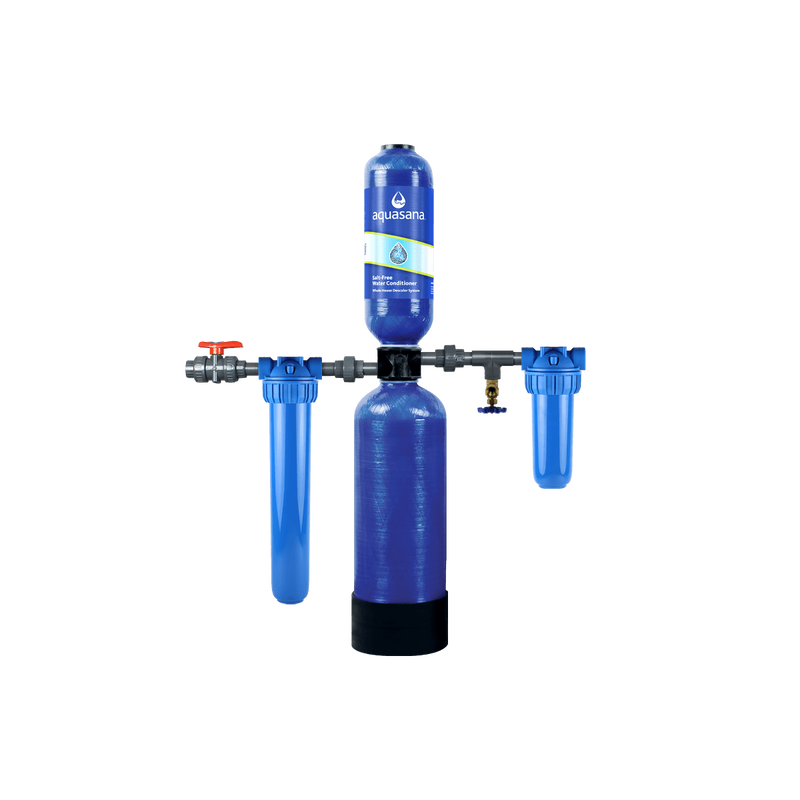
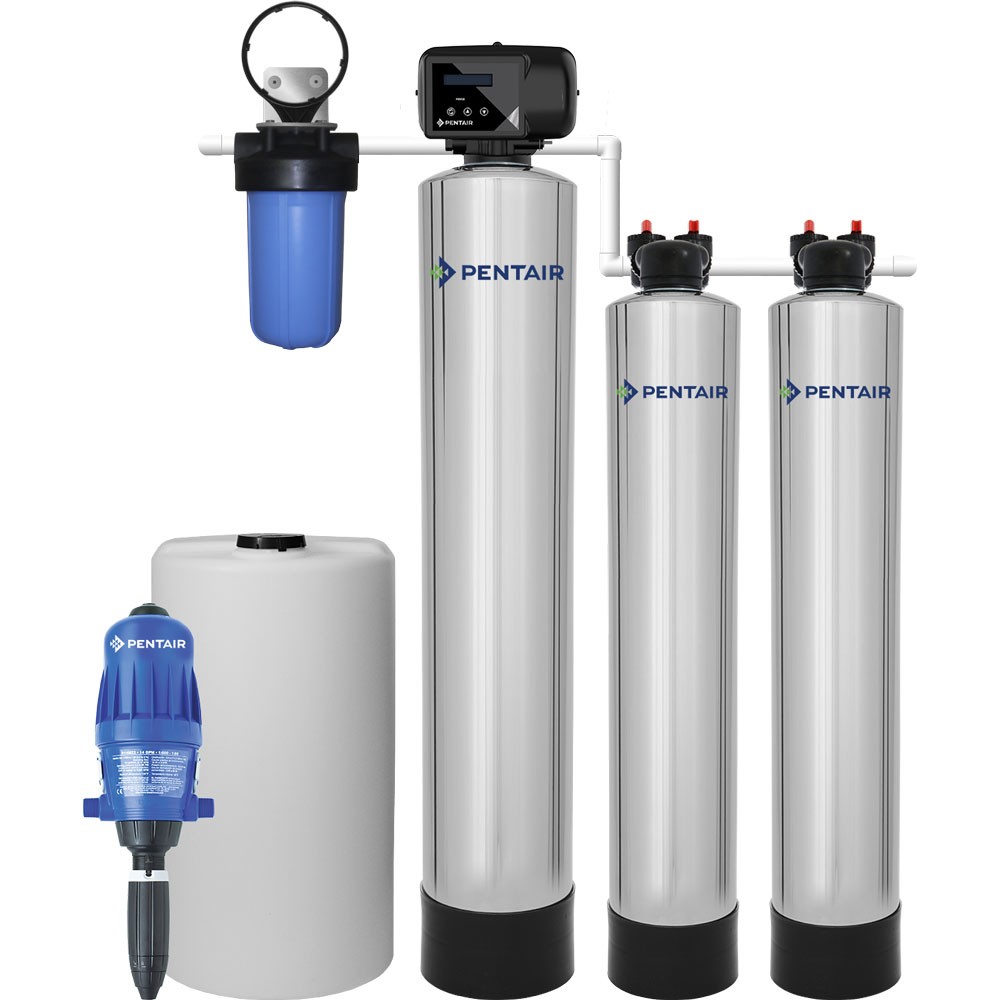

Flow rate alone does not determine suitability. Check whether the specific model can handle your household’s peak demand and whether your water falls within its operating limits.
Which Product Should You Investigate First?
Use your household’s main requirement to identify which system deserves a closer look. This is a starting point, not a substitute for checking the manufacturer’s specifications.
Do not choose by advertised maximum flow alone. The right system must meet both your household demand and the requirements of your incoming water.
Can You Use a Water Conditioner for Well Water?
A water conditioner may be suitable for a private well, but only when the water meets the system’s specified operating conditions. Hardness is just one part of the assessment.
Unlike a typical municipal supply, private well water can vary considerably in its mineral content, sediment, iron, manganese, and other characteristics. Test the water before deciding whether a conditioner can operate on its own.
Well Water Mainly Has Hardness
If hardness is the primary concern and the water meets the manufacturer’s requirements, a salt-free conditioner may be suitable for scale control.
Confirm the hardness level and check the specified operating range before choosing a system.
Well Water Contains Iron or Manganese
Check the actual concentrations against the conditioner manufacturer’s limits. If the levels exceed those limits, or if the water has staining or other mineral-related problems, dedicated treatment may be necessary.
Do not assume a scale-control system will remove these minerals.
Well Water Contains Sediment
Depending on the quantity and type of particles, sediment filtration may be needed before the conditioner. The appropriate filter depends on the water and the system’s requirements.
Addressing sediment can be important for protecting downstream equipment, but it does not resolve unrelated water-quality problems.
Well Water Has Multiple Problems
If the water has several known or suspected issues, start with a suitable water test rather than buying a conditioner first.
The results can help determine whether you need a conditioner, filtration, dedicated mineral treatment, disinfection, or several treatment stages.
Before Installing a Conditioner on Well Water
Check hardness, iron, manganese, and any other parameters relevant to your water. Investigate sediment, unusual odor, or suspected microbial contamination separately where appropriate.
Compare the results with the exact model’s requirements. If the water falls outside those limits, identify the necessary pretreatment or choose a more appropriate treatment approach before installation.
What to Check Before Buying a Water Conditioner
Once you know that scale control is your goal, use this checklist to determine whether a particular system is appropriate for your home. A high advertised flow rate or low purchase price does not guarantee a good match.
1. Water Hardness
Find out how hard your water is and compare the result with the manufacturer’s specified range. This helps establish whether the system is suitable for your water and whether scale control alone meets your needs.
2. Household Flow Rate
Consider how many showers, faucets, and appliances may operate at the same time. Compare that demand with the selected model’s rated flow, not just its maximum or peak-flow figure.
3. Incoming-Water Limits
Review the manufacturer’s requirements for hardness, iron, manganese, and other relevant parameters. This is particularly important for well water, where the incoming conditions may require additional treatment.
4. Pretreatment Requirements
Determine whether sediment filtration, carbon filtration, or another treatment stage is needed before the conditioner. Select pretreatment according to the actual water problem rather than adding equipment without a clear purpose.
5. Maintenance and Media Replacement
Check the expected media life, replacement requirements, maintenance recommendations, and replacement-part availability. A salt-free system can still have ongoing service or media costs.
6. Total Cost of Ownership
Compare the purchase price, installation, required pretreatment, replacement media, and expected maintenance over the period you plan to own the system. Upfront price alone may not reflect the long-term cost.
Before purchasing, confirm three things: the system addresses your actual problem, its specifications match your household, and your water meets the manufacturer’s operating requirements.
Is a Water Conditioner the Right Choice for You?
You should now be able to distinguish scale control from actual water softening and identify the main factors that determine whether a conditioner is suitable for your home.
You Mainly Want to Control Scale
Your main concern is mineral buildup on fixtures, shower glass, plumbing, or appliances, and you prefer a salt-free system.
Next: Compare conditioner flow rates and verify that your water meets the system’s limits.
Compare Water ConditionersYou Want Actually Softened Water
Your goal is to reduce the hardness minerals in the water, not just control scale formation.
Next: Compare conventional water softeners and understand their salt, regeneration, and maintenance requirements.
Explore Water SoftenersYour Water Has Other Problems
You have sediment, staining, unusual odor, or suspected water-quality issues in addition to hardness.
Next: Identify the specific water conditions and determine whether testing or additional treatment is needed before choosing equipment.
Find the Right Water TreatmentControl Scale. Choose the Right System.
A water conditioner can be a practical option when scale control is your main goal and your water meets the system’s requirements.
Compare the technology, household flow demand, incoming-water limits, and long-term maintenance before making your decision.
Start with your water problem. Then choose the treatment that fits.