
Instant Hot Water Dispenser
Is an Instant Hot Water Dispenser Right for Your Kitchen?
An instant hot water dispenser is designed to make very hot water available directly where it is most often needed: at the kitchen sink. In the typical residential setup, the system combines a dedicated faucet with a compact hot water tank installed beneath the sink, along with the plumbing and electrical connections needed to heat and maintain the water at a high temperature.
This type of system is particularly useful when you regularly need small amounts of very hot water for tea, coffee, cooking preparation, oatmeal, or other everyday kitchen tasks. Instead of waiting for hot water to travel from a home’s main water heater or repeatedly heating water in a kettle, you can dispense hot water directly from a dedicated faucet.
An instant hot water dispenser is generally a point-of-use appliance rather than a replacement for a home’s whole-house water heater. Its purpose is to provide a convenient local source of very hot or near-boiling water at the kitchen sink. The right choice depends on how much hot water you use, the configuration of your sink and cabinets, whether you want filtration, and how much installation and ongoing maintenance you are willing to handle.
What Is an Instant Hot Water Dispenser?
An instant hot water dispenser is a point-of-use hot water system that provides very hot water through a dedicated faucet, typically installed at or beside a kitchen sink. Most residential systems use a small tank mounted underneath the sink. The tank heats and stores water so that hot water is available when the faucet is opened.
The basic operating path is straightforward:
Home water supply
↓
Under-sink hot water tank
↓
Heating element
↓
Dedicated hot water faucet
↓
Very hot water at the kitchen sink
The exact configuration varies between products. Some systems provide hot water only through a separate faucet, while others combine hot and cold water functions in a single faucet. Some also incorporate a water filtration system.
The term “instant hot water dispenser” can also be confused with several related products. An instant hot water faucet generally refers to the faucet or dispensing component rather than the complete system. The hot water tank is the component that stores and heats the water in a tank-based system. A tankless water heater, by contrast, heats water as it flows rather than maintaining a supply of heated water in a storage tank.
This distinction matters when comparing products because a product described as an instant hot water dispenser does not necessarily use tankless heating technology. For many kitchen installations, the “instant” convenience comes from keeping a small supply of water hot and ready beneath the sink.
Is an Instant Hot Water Dispenser Right for Your Kitchen?
An instant hot water dispenser can be a practical fit if you frequently need relatively small amounts of very hot water and want that water available directly at the kitchen sink. It can be particularly convenient for making tea or coffee, preparing oatmeal and instant foods, starting cooking tasks, or handling other jobs where waiting for a kettle to heat or for hot water from a distant water heater is inconvenient.
The setup is less suited to situations where you need large volumes of hot water or hot water throughout the house. A point-of-use dispenser is designed around a specific location, usually the kitchen sink, rather than serving multiple fixtures like a whole-house water heating system.
It may also be worth considering another type of appliance if your primary need is a portable countertop source of hot water, if you have very limited space beneath the sink, or if you do not have a suitable electrical connection available. In those situations, a countertop water boiler, electric kettle, or another water-heating solution may better match the way you use hot water.
The key question is therefore not simply whether an instant hot water dispenser can produce hot water. It is whether having a dedicated supply of very hot water at your kitchen sink solves a problem you encounter often enough to justify the space, installation, electricity, and maintenance involved.
How Does an Instant Hot Water Dispenser Work?
Most under-sink instant hot water dispensers work by heating and storing a relatively small amount of water in a dedicated tank. The tank is connected to the home’s cold-water supply and to a faucet installed at the kitchen sink.
Cold Water Enters the System
When the system is installed, cold water from the home’s plumbing enters the hot water tank beneath the sink. The tank is connected to the same general water supply serving the kitchen, although the exact plumbing arrangement depends on the product and installation configuration.
The Under-Sink Tank Heats and Stores Water
Inside a tank-based system, a heating element raises the water to the temperature set by the system’s thermostat. The tank then keeps the stored water hot so that it is ready when you need it.
This is why the experience can feel “instant.” The system does not necessarily heat an entire supply of cold water from scratch after you open the faucet. Instead, it has already heated a small quantity of water and keeps it available for dispensing.
The Thermostat Maintains the Selected Temperature
A thermostat monitors the water temperature and controls the heating cycle. When the temperature falls below the desired range, the system can activate its heating element to bring the water back toward the selected temperature.
The actual temperature range and control method vary by model, so the manufacturer’s specifications should be checked when comparing systems.
Opening the Faucet Delivers Hot Water
When you activate the dedicated hot water faucet, the heated water flows from the under-sink tank through the connected tubing and out of the faucet at the sink.
The amount of water available at a given time depends on factors such as tank capacity, temperature setting, and how quickly the system can heat replacement water.
Fresh Water Replaces the Water That Was Dispensed
As hot water leaves the tank, incoming cold water takes its place. The system therefore does not contain a fixed amount of water that disappears after use. Instead, the supply is continuously replenished through the home’s water connection.
The System Reheats the Incoming Water
After fresh water enters the tank, the heating system brings it back toward the selected temperature. How quickly this happens depends on the tank design, heating capacity, temperature setting, and other characteristics of the particular model.
This is also why “instant” should not automatically be interpreted as “tankless.” A tank-based dispenser can provide hot water immediately because heated water is already stored and ready to dispense, while the system simultaneously reheats incoming water for subsequent use.
What Comes With an Instant Hot Water Dispenser?
Before comparing models, it is important to understand what you are actually buying. An instant hot water dispenser may refer to a faucet, a tank, or a complete system that combines several components. Products that appear similar in a search result can therefore have very different contents and installation requirements.
Faucet-Only Products
A faucet-only product provides the dedicated fixture used to dispense hot water at the kitchen sink. It does not necessarily include the tank or heating system required to produce and maintain hot water.
This type of product may make sense when you are replacing an existing faucet or already have a compatible hot water tank. However, it should not be treated as a complete instant hot water system unless the necessary heating components are included separately.
Tank and Faucet Systems
A more typical under-sink configuration combines a dedicated hot water faucet with a compact tank installed inside the cabinet. The tank heats and stores the water, while the faucet provides a convenient dispensing point at the sink.
The package may also include the fittings, tubing, valves, or other connection components required for installation. The exact contents vary by manufacturer, so the product specifications and installation documentation should be checked before purchase.
Complete Systems
Some products are sold as complete systems that combine the faucet and hot water tank with additional components such as water filtration. Depending on the configuration, a complete system may be designed to provide hot water only or combine hot and cold water functions in a single faucet.
A complete system can simplify product selection because the major components are designed to work together, but it does not necessarily eliminate the need to verify installation requirements. You still need to make sure the system fits beneath the sink, matches the available faucet opening and water connection, and has access to a suitable electrical outlet.
Why the Product Configuration Matters
When comparing instant hot water dispensers, start by determining whether the listing includes a faucet, a tank, or the complete system. Two products can have similar names while representing very different purchases.
The key question is simple: are you buying the component you need, or the complete system required to provide hot water at your sink?
Instant Hot Water Dispenser vs. Other Hot Water Options
An instant hot water dispenser is only one way to get hot water in a kitchen. Understanding how it differs from other common options can help you determine whether an under-sink system actually matches your needs.
Instant Hot Water Dispenser vs. Electric Kettle
An electric kettle heats water in a portable container, usually on the countertop. An under-sink instant hot water dispenser, by comparison, is permanently connected to the plumbing and provides hot water through a dedicated faucet.
The difference is particularly noticeable in everyday convenience. A kettle requires you to fill the container, activate it, and wait for the water to heat each time you need hot water. An under-sink system keeps a supply of heated water available, allowing you to dispense it directly at the sink.
A kettle also offers greater portability and can be useful when you only need hot water occasionally. An instant hot water dispenser is more suited to households that use small amounts of very hot water frequently enough to benefit from having it continuously available.
There is also an important energy consideration. A kettle primarily consumes electricity when heating water, while a tank-based dispenser periodically uses electricity to maintain the temperature of stored water. The more appropriate option therefore depends on usage patterns rather than on wattage alone.
Instant Hot Water Dispenser vs. Countertop Water Boiler
A countertop water boiler is designed to store and heat water in a container positioned on the counter. It often includes its own dispensing mechanism and may be designed specifically for beverages and repeated countertop use.
An under-sink instant hot water dispenser moves the storage and heating components out of sight and provides hot water through a faucet at the sink. This can make better use of counter space and integrate the hot water supply directly into kitchen activities.
The countertop option has an advantage when portability or easy installation is important. An under-sink system is more appropriate when you want a permanent point-of-use supply and are comfortable with plumbing and electrical installation beneath the sink.
Instant Hot Water Dispenser vs. Tankless Water Heater
These products can sound similar because both are associated with rapidly available hot water, but their heating methods are different.
A typical tank-based instant hot water dispenser stores a relatively small quantity of heated water beneath the sink. The stored water is maintained at the selected temperature and is available when the faucet is opened.
A tankless water heater does not maintain the same type of stored hot water supply. Instead, it heats water as it passes through the unit. This can provide continuous hot water within the system’s flow and electrical capacity, but it is a different product configuration with different installation and performance requirements.
For this reason, “instant hot water dispenser” and “tankless water heater” should not automatically be treated as interchangeable terms. When comparing products, identify whether the system uses a storage tank or heats water on demand.
Instant Hot Water Dispenser vs. Traditional Water Heater
A traditional household water heater is designed to supply hot water to multiple fixtures throughout a home. An instant hot water dispenser serves a much narrower purpose by providing a dedicated source of very hot water at a specific point of use, most commonly the kitchen sink.
This distinction can be especially useful when the main water heater is located far from the kitchen. Water may need to travel through the plumbing before hot water reaches the faucet, which can create a waiting period and result in some water being discharged before the desired temperature is reached.
An under-sink dispenser does not necessarily replace the main water heater. Instead, it provides a localized source of hot water for tasks that occur frequently at the sink. If the goal is to supply showers, bathrooms, laundry areas, and other fixtures, a whole-house water heating solution remains the relevant category.
Types of Instant Hot Water Dispensers
Although instant hot water dispensers come in different configurations, most residential kitchen systems can be understood by looking at how the faucet and water supply are configured. The main differences concern what the faucet provides and whether water filtration is incorporated into the system.
Hot-Only Systems
A hot-only system uses a dedicated faucet specifically for dispensing very hot water. The regular kitchen faucet continues to handle the home’s normal cold and hot water supply, while the additional faucet provides a separate source of heated water.
This configuration can be useful when the primary goal is to add a convenient source of very hot water without changing the existing kitchen faucet.
Hot-and-Cold Systems
A hot-and-cold system combines hot and cold water functions within a single dedicated faucet. Depending on the product, the faucet may connect to the home’s cold-water supply while the hot side is supplied by the under-sink heating system.
This configuration can provide a more integrated setup, but compatibility with the existing sink, countertop, plumbing connections, and faucet opening becomes especially important.
Filtered Hot Water Systems
A filtered system incorporates water treatment into the hot water setup. Depending on the design, filtered water may pass through a dedicated filter before being supplied to the hot water tank and faucet, or the filtration system may be configured as part of a broader under-sink water system.
The presence of a filter should not automatically be interpreted as meaning that the system removes every type of contaminant. The appropriate way to evaluate filtration is to look at the specific filter technology, certified claims where applicable, replacement requirements, and contaminants the manufacturer identifies as being reduced.
These configurations can overlap. For example, a system can be both hot-and-cold and filtered. The purpose of these categories is therefore not to place every product into a single box, but to help you understand the configuration you are considering.
How to Choose an Instant Hot Water Dispenser
Once you understand the basic configurations, the next step is to compare the characteristics that affect how the system will perform in your kitchen. The best choice is not necessarily the product with the largest tank, highest temperature, or most features. It is the system whose specifications match your actual usage, installation conditions, and ownership expectations.
Choose the Right Faucet Configuration
Start with the faucet because it determines how the hot water will be accessed and whether the system will work with your sink or countertop.
Some systems use a separate hot-water faucet alongside the existing kitchen faucet. Others combine hot and cold functions into a dedicated fixture. The choice depends partly on the appearance you want and partly on the available mounting space.
Check the faucet’s mounting requirements before purchasing. The size and location of the required faucet opening, the thickness of the countertop or sink deck, and the available clearance beneath it can all affect compatibility.
The activation mechanism also matters. A faucet that uses a lever, button, handle, or spring-loaded mechanism may feel different in everyday use, particularly when you are dispensing very hot water repeatedly.
Consider Tank Capacity
Tank capacity indicates how much water the system can hold and keep heated at one time. A larger tank can provide a greater stored supply, but that does not automatically make it the better choice.
The appropriate capacity depends on how frequently you use hot water and how much you typically dispense at once. A household that uses small amounts occasionally may have little reason to install a larger tank, while frequent use can make capacity more important.
Capacity should therefore be considered together with recovery performance rather than viewed as an isolated specification.
Look at Recovery Rate
Recovery rate describes how quickly the system can heat replacement water after hot water has been dispensed. This becomes increasingly important when several people use the system or when hot water is dispensed repeatedly within a short period.
Two systems can have similar tank capacities but provide different real-world performance if their heating systems recover at different rates.
A useful way to think about the distinction is that capacity tells you how much hot water is stored, while recovery rate tells you how quickly the system can replenish that supply after use.
Check Temperature Range and Control
Temperature specifications indicate how hot the system can maintain the water and whether the user can adjust the setting.
Some systems offer a defined temperature range, while others are designed around a preset temperature. Adjustable controls can be useful when your needs vary between beverages, food preparation, and other kitchen tasks.
Higher temperature is not automatically better. Very hot water can increase scalding risk and may also affect energy consumption. The useful temperature range is the one that matches the intended application while remaining manageable and safe to use.
Evaluate Filtration
If you are considering a filtered system, evaluate the filtration component separately from the hot water function.
Look at the type of filter used, the contaminants it is specifically designed or certified to reduce, the expected filter life, the replacement cost, and whether replacement filters are readily available.
Avoid judging a filtration system simply by the presence of the word “filter” in a product description. What matters is what the filter is actually designed and, where applicable, certified to reduce.
Consider Energy Use
Tank-based instant hot water dispensers consume electricity not only when heating newly supplied water but also when maintaining the temperature of water already stored in the tank.
Useful specifications to examine include the heating element’s wattage, tank insulation, thermostat design, tank capacity, and temperature setting. However, none of these figures alone determines the system’s overall energy consumption.
For example, a lower-wattage heating element does not necessarily mean lower total energy use if the system takes longer to recover or operates differently. Actual consumption depends on the design of the system and how frequently it is used.
Check Installation Compatibility
Before purchasing, verify that the system can physically and electrically fit your kitchen.
Check the available space beneath the sink, the required faucet opening, the water connection, the electrical outlet, and the plumbing configuration specified by the manufacturer.
Installation details deserve more attention than they often receive in product comparisons. A system with attractive specifications is of little practical value if the tank cannot fit inside the cabinet or the faucet cannot be installed in the available mounting location.
Look at Safety Features
Because these systems can deliver very hot water, safety should be considered alongside convenience.
Look for features such as temperature adjustment, self-closing or controlled faucet mechanisms, and other safeguards designed to reduce accidental exposure to hot water. If children have access to the kitchen, the faucet’s activation method and location may be particularly relevant.
Safety features should complement proper installation and responsible use rather than replace them.
Consider Tank Material
The tank’s construction material can affect durability, corrosion resistance, and long-term ownership considerations. Stainless steel is commonly used in hot water tanks and is therefore a relevant specification when comparing products.
However, the material alone should not determine the purchase decision. Tank construction, insulation, heating system design, warranty coverage, and replacement support all contribute to the overall value of the system.
Check the Warranty and Replacement Parts
An instant hot water dispenser is a connected appliance with components that may eventually require service or replacement. Before buying, check how long the tank and faucet are covered, what the warranty actually includes, and whether replacement parts remain available.
For filtered systems, also check the availability and cost of replacement filters. For systems with specialized faucets or other proprietary components, the availability of those parts can matter just as much as the initial purchase price.
A product that is inexpensive to purchase but difficult or expensive to maintain may have a very different long-term cost from a system with readily available replacement parts and clearer warranty support.
Are Instant Hot Water Dispensers Safe?
Instant hot water dispensers are designed to provide very hot water conveniently at the kitchen sink, but the water they produce may be considerably hotter than ordinary tap water. That difference is important to keep in mind when choosing, installing, and using the system.
A properly installed dispenser can be used safely as part of normal kitchen activities. The main safety consideration is simply recognizing that the water may be hot enough to cause a scald if it comes into direct contact with skin. Features such as temperature controls, faucet design, and appropriate installation can help make everyday use more manageable.
Scalding Risk
The most important safety consideration is the temperature of the dispensed water. Many instant hot water systems are designed to produce water at temperatures approaching the boiling point, although the actual temperature depends on the model and its settings.
Water at these temperatures can cause burns much more quickly than normal hot tap water. Take particular care when dispensing water into a cup, bowl, or other container, especially when the container is small, lightweight, or being held in your hand.
It is also a good practice to avoid placing your hands or fingers directly under the stream of water to check its temperature. If you need to determine whether the water is suitable for drinking or another task, use the appropriate container and allow the water to cool as needed.
The goal is not to treat the dispenser as unusually dangerous, but to recognize that it is a source of very hot water rather than an ordinary kitchen faucet.
Temperature Control
Temperature control can make an instant hot water dispenser easier to use for different kitchen tasks. Depending on the model, the system may provide a fixed temperature or allow the user to adjust the temperature within a specified range.
A lower setting may be appropriate when extremely hot water is not necessary, while a higher setting can be useful for applications that specifically require very hot water. Adjustable temperature control can therefore provide a practical balance between convenience and everyday handling.
When comparing models, check how the temperature is controlled and whether the selected setting can be adjusted easily. The highest available temperature should not automatically be treated as the most useful setting. Choose a temperature appropriate for the task rather than keeping the system hotter than necessary.
Faucet Design
The faucet is the part of the system that you interact with most often, so its design can have a direct effect on everyday safety and usability.
Different models may use levers, buttons, handles, or other activation mechanisms. Some faucets are designed to require a deliberate action before hot water is released, which can help reduce accidental activation.
The shape and position of the faucet also matter. A dispensing point that is easy to control and positioned where the stream can be directed safely into a container can make routine use more predictable.
When comparing faucets, consider not only appearance and convenience but also how easily the hot water can be activated, controlled, and directed.
Children and Accidental Activation
If children regularly use or enter the kitchen, the location and activation mechanism of the hot water faucet deserve additional consideration.
A child may not immediately recognize that a dedicated hot water faucet can produce water at a much higher temperature than a normal kitchen tap. A faucet that requires a deliberate action to activate can help reduce the chance of accidental dispensing, but supervision and sensible placement remain important.
Consider where the faucet is installed and whether its controls can be reached easily by young children. If the kitchen is used by people of different ages, choose a configuration that makes the hot water function clear and predictable.
These considerations do not mean that an instant hot water dispenser needs to be kept completely inaccessible. They simply reflect the fact that the system should be treated as a source of very hot water.
Proper Installation
Correct installation is an important part of safe operation. The tank, faucet, water connections, and electrical supply should be installed according to the manufacturer’s requirements.
The electrical connection should be suitable for the appliance, and plumbing connections should be properly secured to reduce the risk of leaks. The tank also needs sufficient clearance and support within the cabinet according to the installation instructions.
If the installation requires modifications to plumbing or electrical connections that are outside your experience, using a qualified professional can help ensure that the system is installed correctly.
After installation, check the connections and operation before regular use. Any unusual leaking, electrical behavior, or other problem should be addressed rather than ignored.
Maintenance
Routine maintenance helps keep the dispenser operating as intended. The specific requirements depend on the system, but may include replacing water filters, inspecting connections, cleaning or servicing the faucet, and following the manufacturer’s instructions for the hot water tank.
Filtered systems require particular attention to filter replacement. An overdue filter does not necessarily mean that the hot water function has stopped working, but it can affect the performance of the filtration system and the quality of the treated water.
It is also worth paying attention to changes in normal operation. A noticeable leak, unusual noise, inconsistent temperature, or problem with the faucet should be investigated rather than assuming that the system will correct itself.
An instant hot water dispenser is ultimately a convenience appliance designed to make very hot water readily available. Its safe use mainly comes down to treating the water according to its actual temperature, using the faucet as intended, and following the installation and maintenance requirements for the particular system.
Best Instant Hot Water Dispensers
There is no single instant hot water dispenser that is the right fit for every kitchen. A household that only wants a simple source of near-boiling water has different requirements from someone who also wants filtered drinking water or a single faucet for both hot and cold water.
For that reason, it is more useful to compare these systems by the type of kitchen setup they are intended to serve. The products below represent different configurations rather than a strict ranking from first to last.
Best for a Basic Hot-Water Setup
InSinkErator HOT250 Instant Hot Water Dispenser
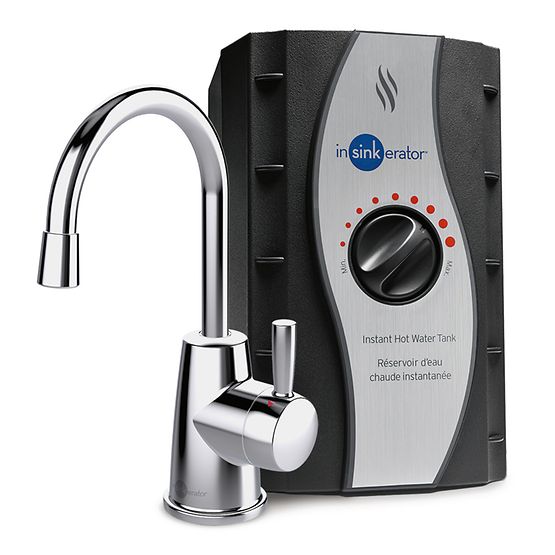
Best for: A straightforward hot-only setup without built-in filtration
System type: Under-sink tank-based hot water dispenser
Tank capacity: 2/3 gallon
Temperature range: 160°F to 210°F, with a factory setting around 200°F
Faucet configuration: Single-handle hot-water faucet with a spring-loaded, self-closing hot valve
Filtration: No built-in filter
Installation: Requires a standard 1 3/8-inch faucet opening and an under-sink electrical outlet; the tank uses tool-free connections and includes dry-start protection
Warranty: 3-year limited in-home service warranty
Why consider it: The HOT250 is a relatively straightforward way to add near-boiling water to a kitchen without building a more complicated filtered water system. It combines the faucet and 2/3-gallon stainless steel tank in one system, with adjustable temperature control and a faucet designed to shut off when the handle is released.
Potential limitation: It is designed around hot water rather than integrated filtration, so households that specifically want filtered drinking water will need a different configuration or additional filtration equipment.
Why this product fits this use case
The HOT250 makes the most sense when the main reason for buying an instant hot water dispenser is simple: you want very hot water available at the kitchen sink without adding a separate filtration system. Its configuration keeps the system relatively focused on that single purpose, while still providing adjustable temperature control and a dedicated faucet.
Best for a Filtered Hot-Water System
InSinkErator HWT-F1000S
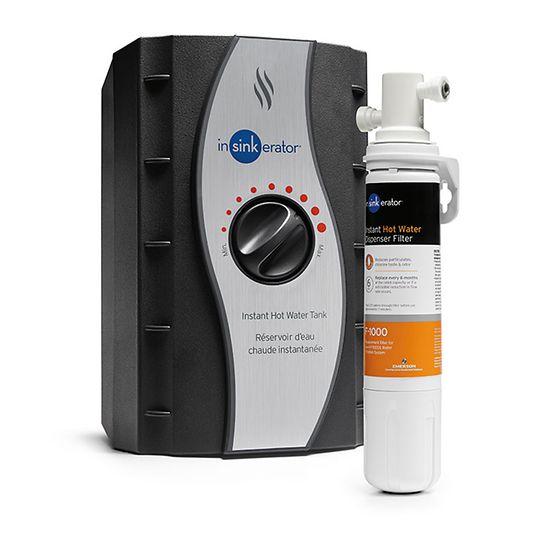
Best for: Households that want filtered water as part of the under-sink hot-water system
System type: Under-sink hot water tank with integrated filtration system
Tank capacity: 2/3 gallon
Temperature range: 160°F to 210°F, with a factory setting around 200°F
Faucet configuration: Designed to work with compatible InSinkErator instant hot water dispenser faucets
Filtration: F-1000S filtration system; the manufacturer states that the filter reduces particulates and chlorine taste and odor and is NSF 42 certified
Installation: Includes the filtration head, tubing, fittings, mounting hardware, and tank connections; a compatible dispenser faucet is required separately
Warranty: 3-year in-home limited warranty for the tank and 1-year warranty for the filtration system, excluding replacement filter cartridges
Why consider it: The HWT-F1000S is designed for users who want filtration to be part of the hot-water system rather than treating the hot-water tank and filtration as completely separate appliances. The manufacturer specifies up to 60 cups of hot filtered water per hour and recommends filter replacement approximately every six months for optimal performance.
Potential limitation: This is not a complete faucet-and-tank package by itself. You still need a compatible dispenser faucet, and replacement filters become part of the ongoing cost of ownership.
Why this product fits this use case
The main distinction here is not simply that the system contains a filter. It is that filtration is integrated into the under-sink hot-water configuration. This makes it more relevant for households that intend to use the dispenser for drinking water and want the water treatment component to be part of the same installation.
It is also important to look at the actual filtration claims rather than assuming that any filtered instant hot water dispenser removes every type of contaminant. The F-1000S has specific manufacturer-stated reduction claims, so those claims should be compared with the water-quality issue you are actually trying to address.
Best Hot-and-Cold Configuration
InSinkErator HOT250 Hot & Cold Water Dispenser
Best for: Users who want hot and cold drinking water through one dedicated faucet
System type: Under-sink hot-and-cold dispenser with a 2/3-gallon hot water tank
Tank capacity: 2/3 gallon for the hot-water side
Temperature range: The hot-water tank is adjustable from 160°F to 210°F
Faucet configuration: Two-handle faucet providing near-boiling hot water and filter-ready cold water
Filtration: No built-in filter; the cold-water side is designed to be compatible with an optional InSinkErator filtration system
Installation: Requires a standard 1 3/8-inch faucet opening and an under-sink electrical outlet
Warranty: 3-year limited in-home service warranty
Why consider it: The HOT250 Hot & Cold version combines the convenience of near-boiling water with a dedicated cold-water outlet in the same faucet. The cold side is filter-ready, allowing filtration to be added without changing the basic faucet configuration. The faucet also uses a spring-loaded hot-water handle that automatically shuts off when released.
Potential limitation: The system does not include a built-in water filter, so users who want filtered cold drinking water need to account for the additional filtration component.
Why this product fits this use case
This configuration is useful when the goal is to reduce the number of separate fixtures around the kitchen sink. Instead of installing a hot-only dispenser beside the main faucet, the HOT250 Hot & Cold system provides both functions through a dedicated fixture.
The distinction between “filter-ready” and “filtered” is important here. The faucet can work with an additional filtration system, but the dispenser itself should not be treated as a complete water-filtration system simply because it has a cold-water connection.
Best Compact Option
InSinkErator HWT-00
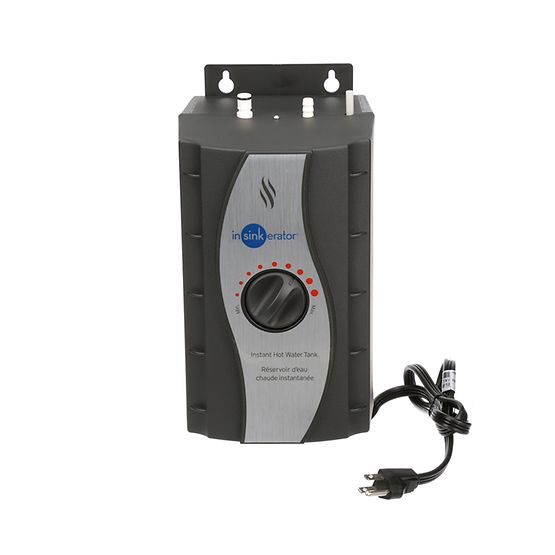
Best for: Existing compatible dispenser setups where the tank itself is the main component being replaced or selected
System type: Under-sink hot-water storage tank
Tank capacity: 2/3 gallon
Temperature range: 160°F to 210°F
Faucet configuration: Requires a compatible InSinkErator instant hot water dispenser faucet
Filtration: No filter included
Installation: Designed for use with InSinkErator instant hot water dispensers; the tank has tool-free connections and dry-start protection
Warranty: 3-year parts and labor limited warranty
Why consider it: The HWT-00 is a compact tank designed specifically around the InSinkErator dispenser ecosystem. It provides a 2/3-gallon stainless steel tank, adjustable temperature control, and a rated output of up to 60 cups per hour. The tank itself weighs approximately 5.7 pounds, although the space required inside the cabinet must still be checked against the installation dimensions rather than judged from weight alone.
Potential limitation: This is a tank component rather than a complete faucet-and-tank system. It is therefore not the most appropriate choice for someone starting from scratch and looking for everything needed in one package.
Why this product fits this use case
A compact tank does not necessarily mean that a system has a smaller hot-water capacity. The HWT-00 still uses a 2/3-gallon tank, which is common among these under-sink systems. Its relevance for space-conscious installations comes from its compact under-sink form factor and the fact that the tank is designed to remain hidden inside the cabinet.
However, cabinet space should be measured before purchase. A tank that is compact enough for one kitchen cabinet may not fit comfortably alongside a garbage disposal, water filter, cleaning supplies, or other under-sink equipment.
Best for Frequent Hot-Water Use
InSinkErator HWT300 Digital Instant Hot Water Tank
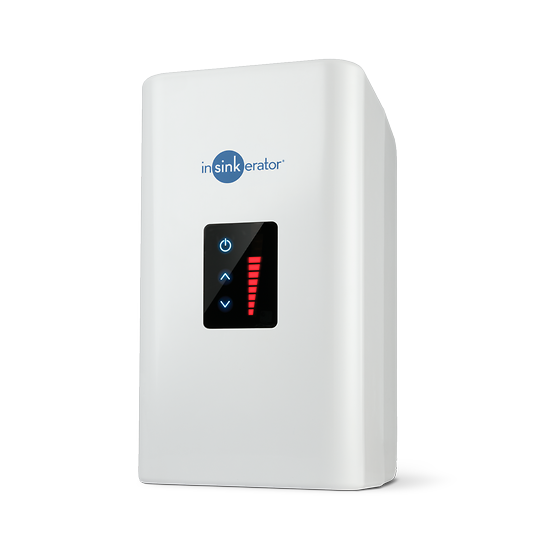
Best for: Frequent use where temperature precision and faster recovery are important
System type: Digital under-sink instant hot water tank
Tank capacity: 2/3 gallon
Temperature range: 190°F to 210°F
Faucet configuration: Compatible instant hot water dispenser faucet required
Filtration: Available as a separate configuration with the HWT300-F3000S filtration system
Installation: Requires an appropriate under-sink installation, electrical connection, water connection, and compatible faucet
Warranty: 4-year in-home limited warranty
Why consider it: The HWT300 differs from the standard tank configuration primarily through its digital temperature control and higher-power heating element. InSinkErator specifies a 1,300-watt heating element for rapid recovery, a 2/3-gallon stainless steel tank, digital temperature adjustment from 190°F to 210°F, and temperature precision of approximately ±1°F.
Potential limitation: Its advantages are more relevant to users who will actually benefit from precise temperature control and faster recovery. For a household that only dispenses small amounts of hot water occasionally, the additional features may be less important than a simpler system.
Why this product fits this use case
Frequent use changes which specifications matter most. Once a household repeatedly dispenses hot water within a short period, recovery performance becomes more relevant than simply looking at the tank’s stored capacity.
The HWT300 is particularly interesting in this context because its 1,300-watt heating element is specifically designed for rapid recovery, while its digital thermostat allows more precise control than the conventional adjustable thermostat found on many standard systems.
This does not mean that every frequent user needs the HWT300. The appropriate choice still depends on how much water is dispensed at a time, how often the system is used, and whether the additional temperature-control features justify the higher level of equipment.
How to Compare These Options
The products above represent different ways of solving the same basic problem rather than five versions of the same appliance.
If you only need very hot water at the sink, a hot-only system such as the HOT250 keeps the configuration relatively simple. If drinking water and filtration are central to the installation, the HWT-F1000S provides a more integrated filtration approach. If you want hot and cold water from one dedicated fixture, the HOT250 Hot & Cold configuration changes the faucet arrangement without requiring a completely different type of hot-water system.
For users concerned primarily with the under-sink footprint, the tank dimensions and available cabinet space should be checked before considering the faucet design. And if the dispenser will be used repeatedly throughout the day, recovery performance becomes more important, making systems such as the HWT300 worth closer examination.
The important point is that “best” depends on the job the dispenser needs to perform. A product with more features is not automatically a better fit if those features do not solve a problem in your kitchen.
Instant Hot Water Dispenser Buying Checklist
Use this checklist before choosing an instant hot water dispenser. The goal is to confirm that the system matches your actual hot-water needs, kitchen layout, and long-term ownership expectations.
☐ Do I need hot-only or hot + cold?
☐ How much hot water do I normally use?
☐ Is the tank capacity sufficient for my typical usage?
☐ Is the recovery rate adequate for repeated dispensing?
☐ What temperature range do I actually need?
☐ Do I need filtration, and does the filter address the specific water-quality concerns I have?
☐ Is the faucet compatible with my sink or countertop opening?
☐ Is there enough space under the sink for the tank and any additional equipment?
☐ Is a suitable electrical outlet available where the system will be installed?
☐ What will replacement filters, cartridges, and other replacement parts cost?
☐ What safety features does the system have, particularly for controlling very hot water?
☐ What does the warranty cover, and for how long?
If you can answer these questions before purchasing, it becomes much easier to narrow the choices to systems that actually fit your kitchen rather than simply comparing the largest number of features.